Running a small business often feels like doing ten jobs at once: answering calls, sending quotes, scheduling appointments, chasing invoices, following up with leads, and trying to keep marketing consistent. When everything depends on you, growth can start to feel like a trade-off—you either serve customers or you work on the business.
That’s where automation becomes practical—not as a “big business” luxury, but as a way to remove repetitive work, reduce mistakes, and create a smoother experience for customers. The goal isn’t to replace the human side of your business. It’s to make sure the basics happen reliably, even when you’re busy.
What small business automation really means
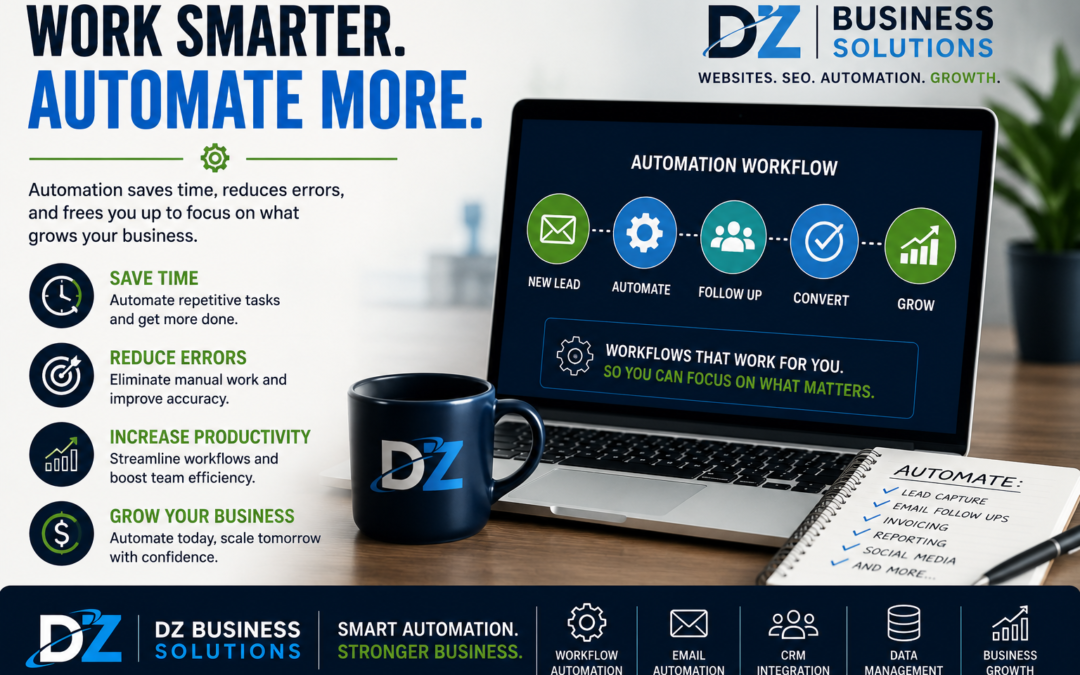
Automation is simply setting up systems so common tasks happen automatically based on a trigger. For example:
- When someone fills out your contact form, they immediately receive a confirmation message.
- When you miss a call, the caller gets a text asking how you can help.
- When an appointment is booked, reminders go out without you sending anything manually.
Most automation is about connecting tools you may already use (website forms, email, calendars, payment systems, CRM) so they work together as one process.
Why automation matters (beyond saving time)
Time savings are real, but the bigger advantage is consistency. Many small business “growth problems” come from normal, everyday gaps:
- Leads don’t get followed up quickly enough, so they choose a competitor.
- Information gets lost between calls, texts, emails, and sticky notes.
- No-shows happen because reminders aren’t consistent.
- Reviews don’t get requested, so your online reputation grows slower than it should.
Automation helps you deliver the same dependable experience to every lead and customer—without needing to remember every step.
Signs you’re ready for automation
If any of these feel familiar, automation can likely help:
- You respond to inquiries “when you can,” not within a set timeframe.
- You manually copy/paste lead details into a spreadsheet or notes app.
- Customers often ask, “Did you get my message?”
- You spend too much time scheduling and rescheduling.
- You forget to follow up on estimates, invoices, or unfinished jobs.
- Marketing happens inconsistently because operations take over your day.
What to automate first (high impact, low complexity)
You don’t need to automate everything. Start with the steps that affect revenue, customer experience, and your daily workload.
1) Lead capture and instant follow-up
When someone reaches out, the first few minutes matter. If your response takes hours (or days), you may be losing business quietly.
Smart first automations:
- Send an instant email/text confirming the inquiry and setting expectations.
- Create an internal alert so you or your team sees new leads immediately.
- Add the lead automatically to a CRM or lead list (no manual entry).
Why it matters: Faster response times generally lead to more booked calls and appointments, and they make your business feel organized and trustworthy.
2) Appointment scheduling and reminders
Scheduling shouldn’t become a multi-message conversation. Automation can handle booking, confirmations, reminders, and reschedules.
Smart first automations:
- Online booking tied to your real availability.
- Automatic confirmation messages and calendar invites.
- Reminder texts/emails 24 hours and 2 hours before the appointment.
Why it matters: It reduces no-shows, cuts admin time, and makes customers feel taken care of.
3) Estimate and invoice follow-ups
Many businesses lose revenue simply because follow-up is inconsistent. A great estimate doesn’t help if it sits unanswered.
Smart first automations:
- Send a polite follow-up if an estimate hasn’t been accepted after a set number of days.
- Send payment reminders for overdue invoices (without awkward manual chasing).
- Notify your team when a quote is accepted or an invoice is paid.
Why it matters: You stay top-of-mind without feeling pushy, and cash flow becomes more predictable.
4) Review requests after service
Most happy customers won’t leave a review unless you ask—and the easiest time to ask is right after the job is complete.
Smart first automations:
- Send a review request by text/email after an appointment is marked complete.
- Direct customers to the review platform you care about most (like Google).
- Route negative feedback privately so you can resolve issues quickly.
Why it matters: A steady flow of authentic reviews improves trust, strengthens local SEO, and helps customers choose you faster.
5) Simple nurture sequences for leads who aren’t ready
Not every lead books immediately. Automation can keep your business visible and helpful without constant manual outreach.
Smart first automations:
- A short email sequence that answers common questions.
- Periodic check-ins for open estimates.
- Educational messages that clarify your process and what makes you different.
Why it matters: You reduce the “leaky bucket” problem where leads disappear because they weren’t nurtured.
Common automation mistakes to avoid
Automation works best when it supports your brand and service style. A few pitfalls to watch for:
- Over-automating too soon: Start with the biggest bottlenecks before adding complexity.
- Generic messaging: Your automated messages should still sound like your business.
- No clear ownership: Automations can alert you, but someone still needs to follow up and close the loop.
- Disconnected tools: If systems don’t talk to each other, you’ll still end up doing manual work.
How DZ Business Solutions can help
Automation should make your business easier to run—not create another confusing tech project. DZ Business Solutions helps small businesses set up practical automation that fits your current workflow and tools.
Depending on your needs, DZ Business Solutions can help with:
- Lead capture improvements (forms, tracking, routing, follow-up flows)
- Scheduling systems that reduce back-and-forth and no-shows
- Automation for quotes, invoices, and follow-ups
- Reputation management workflows for consistent review generation
- Website and SEO alignment so traffic turns into real leads
The focus is always on clarity: what should happen, when it should happen, and who is responsible—so your systems work reliably day after day.
Next step: identify your best first automation
If you’re not sure where to start, a good rule is to pick one process connected to revenue (lead response, scheduling, estimates, or reviews) and make it consistent. Even one well-built automation can remove hours of admin work each week and help you respond faster than competitors.
If you’d like a second set of eyes on your current process, DZ Business Solutions offers a free consultation to help you identify quick wins and map out an automation plan that makes sense for your business.
Ready to Grow Your Business Online?
DZ Business Solutions helps businesses with website design, SEO, automation, AI solutions, reputation management, and digital marketing strategies that drive growth.
Whether you’re launching a new business or looking to attract more customers, we’re here to help.