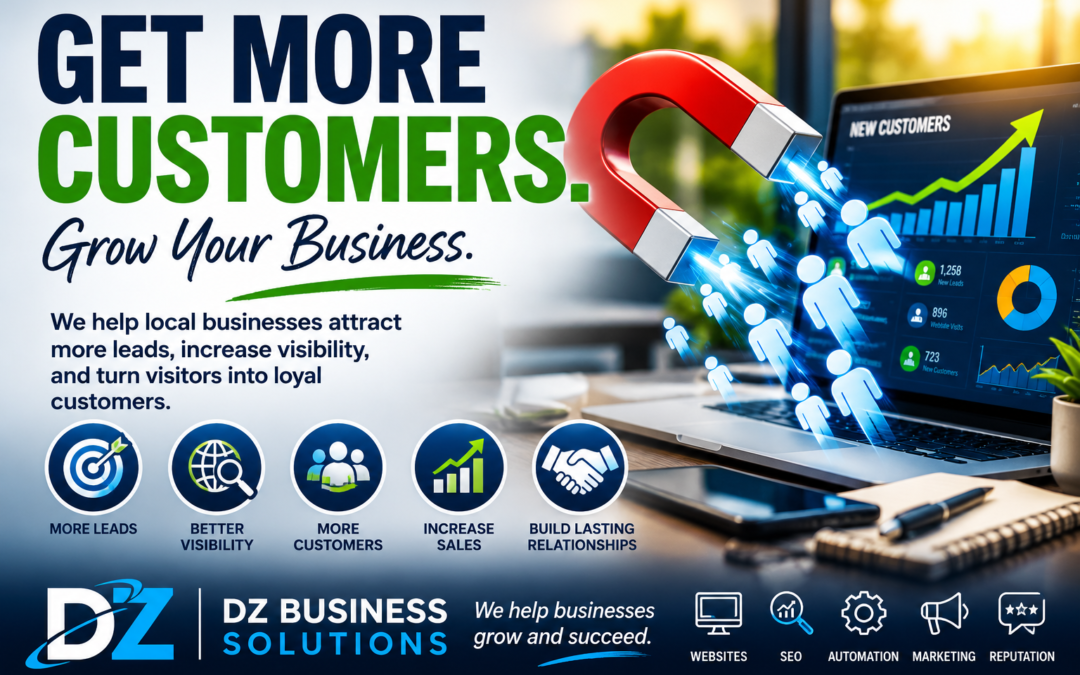
“We need more customers” is one of the most common (and most urgent) goals for small businesses. But getting more customers isn’t only about spending more on ads or posting more on social media. Most of the time, growth comes from tightening up a few key areas: how people find you, what they see when they do, and how easy it is to take the next step.
This guide breaks down practical, realistic ways to bring in more leads and turn them into paying customers—without gimmicks or overpromises.
Start by identifying where customers drop off
If you’re not getting enough customers, the cause is usually one (or more) of these:
- Low visibility: People don’t know you exist, or you’re hard to find online.
- Weak trust: People find you, but they hesitate because your online presence doesn’t build confidence.
- Poor conversion: People are interested, but your website or process makes it hard to contact you or book.
- Slow follow-up: Leads reach out, but they don’t hear back fast enough, so they choose someone else.
When you know which gap is costing you opportunities, you can focus your time and budget where it will actually help.
Why getting more customers is harder than it should be
Many small businesses rely on referrals, walk-ins, or a single marketing channel. Those are valuable, but they can be inconsistent. Meanwhile, customers increasingly make decisions online—even when they plan to buy locally.
If your business doesn’t look clear, credible, and easy to engage with online, you may be losing customers without realizing it. Not because you’re not good at what you do, but because the decision-maker never gets far enough to see it.
Make it easy for customers to find you (local visibility)
For most service-based and local businesses, visibility starts with showing up in the places customers already search:
- Google Business Profile: Accurate categories, services, photos, hours, and consistent business info.
- Local SEO: Your website should clearly indicate what you do and where you do it (service areas, city pages where appropriate).
- Consistent listings: Business name, address, and phone should match across major directories.
Why it matters: If you don’t show up when someone searches “near me” or for your service in your town, you’re invisible at the moment they’re ready to buy.
Turn visitors into leads with a website that converts
Your website doesn’t need to be flashy. It needs to answer questions quickly and make the next step obvious.
Key conversion elements to check:
- Clear headline: What you do, who you help, and where you operate.
- Strong calls-to-action: “Call,” “Request a quote,” “Schedule,” or “Get an estimate” placed throughout the page.
- Fast load speed: People leave slow sites—especially on mobile.
- Mobile-friendly layout: Big buttons, easy navigation, click-to-call.
- Proof: Reviews, testimonials, before/after photos, certifications, and a clear portfolio.
- Simple contact options: Don’t hide your phone number; keep forms short.
Why it matters: A steady stream of visitors won’t help if they don’t convert. Even small improvements—like better calls-to-action or clearer service pages—can reduce drop-offs.
Build trust with reviews and reputation management
If two businesses offer similar services at similar prices, customers often choose the one that feels safer. Online reviews and a well-managed reputation help people feel confident.
Trust builders to prioritize:
- Request reviews consistently: A simple process makes it easier for happy customers to leave feedback.
- Respond professionally: Thank positive reviewers and address concerns calmly.
- Show reviews on your site: Make proof visible where decisions happen.
Why it matters: A good reputation not only attracts more leads—it helps you close them faster and reduces price-shopping.
Use social media to stay visible (without burning time)
Social media works best for most small businesses when it supports trust and awareness—not when it’s treated as the only lead source.
Practical content ideas that don’t require constant creativity:
- Before/after projects and short case studies
- Customer FAQs and common misconceptions
- Behind-the-scenes processes that show quality
- Seasonal reminders and service checklists
Why it matters: People often check your social profile after they find you on Google. An active, professional presence reinforces that you’re legitimate and responsive.
Capture and follow up with leads faster
One of the easiest ways to get more customers is to stop losing the ones already reaching out.
If your team is busy (which is common), leads can sit too long. A few improvements can help:
- Instant confirmation: Let people know their message was received and what happens next.
- Organized inquiry tracking: Keep leads from falling through the cracks.
- Clear response time goal: Even a simple standard (same day or next business day) helps.
Why it matters: Fast, consistent follow-up often wins business—even when competitors offer similar services.
Where DZ Business Solutions can help
Getting more customers is usually not one magic change—it’s a set of improvements that work together. DZ Business Solutions helps small businesses strengthen their online presence and turn more attention into real inquiries.
Depending on what you need most, support can include:
- Website design and updates focused on clarity, trust, and conversions
- SEO to improve visibility in search results and local searches
- Social media marketing that supports consistent branding and trust-building
- Reputation management to help generate and showcase reviews professionally
- Automation to improve lead capture and follow-up consistency
The goal is simple: help more of the right people find you, trust you, and contact you.
Next step: book a free consultation
If you want more customers but aren’t sure which part of your online presence is holding you back, a quick outside perspective can save you time and guesswork.
Book a free consultation with DZ Business Solutions and we’ll help you identify where leads are being lost and what improvements are most likely to make an impact.